Korean Fermented Foods: A Complete Guide
Fermentation is not a trend in Korea — it is the foundation of the entire cuisine. From kimchi to doenjang to jeotgal, fermented foods define the flavour of Korean cooking. Here is how they work and why they matter.
Fermentation: The Heart of Korean Cooking
Korea's relationship with fermentation stretches back thousands of years. Before refrigeration, before canning, fermenting was the way to preserve vegetables through harsh winters and to transform simple ingredients into complex, deeply flavoured foods. What makes Korean fermentation distinctive is its scale and diversity — Korean food researchers have documented more than 180 kimchi varieties, each with regional variations ([Wikipedia: Kimchi](https://en.wikipedia.org/wiki/Kimchi)). Fermentation in Korea is not a technique; it is a philosophy.
The result is a cuisine where the most fundamental flavours — the base notes of nearly every dish — come from processes that take weeks or months. A bowl of doenjang-jjigae tastes the way it does because the paste at its centre fermented for six months before it reached your spoon. That depth is not achievable by adding more salt or more soy sauce. It requires time and microbes.
Kimchi: The Science Behind the Sour
Most people in the UK know kimchi as spicy fermented cabbage. That is accurate but incomplete. Baechu-kimchi (napa cabbage kimchi) is the default, but there are dozens of named varieties: kkakdugi (cubed radish), oi-sobagi (stuffed cucumber, summer), chonggak (whole small radishes, also called "bachelor kimchi"), baek kimchi (white, no chilli, used for children and the spice-averse), pa-kimchi (spring onion), and gat kimchi (mustard leaf), among others. In 2013, UNESCO added *kimjang* — the communal autumn kimchi-making tradition — to its Intangible Cultural Heritage list.
The fermentation process has three distinct stages. First, the vegetables are salted (2–3% of vegetable weight). The salt draws out water by osmosis and kills off most bacteria that are not salt-tolerant, selecting for the species that will drive the ferment. Second, *Leuconostoc mesenteroides* gets to work in the first two to four days — a relatively mild bacterium that produces lactic acid, acetic acid, and carbon dioxide, giving young kimchi its first sour notes and the gentle fizz you can feel on the tongue. Third, *Lactobacillus* species take over as the pH drops, pushing it down to around 4.2 — the sharp, fully matured tang of kimchi that has been fermenting for several weeks.
The process does not stop in the fridge. Refrigerator temperatures slow fermentation dramatically but do not halt it. Kimchi aged one year is still edible; it is sour and punchy, and is used for kimchi-jjigae (stew) and kimchi-jeon (pancakes) where the intensity is an asset rather than a flaw.
The paste that goes onto the cabbage is itself a flavour architecture: gochugaru (Korean chilli flakes), garlic, ginger, fish sauce, saeu-jeot (salted fermented shrimp, optional but traditional), and a rice flour paste that helps the paste cling and feeds the fermentation. The rice flour paste (*pul*) is made by simmering sweet rice flour in water to a thin starch gel — it adds no noticeable flavour but gives the paste body and fuels the bacteria.
For UK home fermenters: napa cabbage appears in Sainsbury's and Tesco seasonally as "Chinese leaf"; Wing Yip and Loon Fung stock it year-round. Gochugaru is at Sous Chef or Oriental Mart — Korean-origin gochugaru is preferred over Chinese-origin, which is milder and differently flavoured. Use glass or food-grade plastic containers, not metal (the acid reacts with it). Burp the jar daily in the first 48 hours. Bubbles and tang are success; rotten-egg smell means something went wrong, usually insufficient salt.
The Jang Trio: Ganjang, Doenjang, Gochujang
Korea's three essential fermented pastes — ganjang (soy sauce), doenjang (soybean paste), and gochujang (chilli paste) — are collectively called *jang* (장). Traditionally, all three begin with *meju*: bricks of fermented, dried soybean that are hung to dry through the autumn and colonised by beneficial moulds and bacteria. The meju is soaked in brine in large earthenware jars (*onggi*) for months. The liquid that separates rises to the top and becomes ganjang. The solids left behind are doenjang.
This is not metaphorical — ganjang and doenjang are literally the same ferment at different extraction points. That is why they share a family of flavour, and why they complement rather than duplicate each other in a dish.
Gochujang adds a third dimension: glutinous rice powder and gochugaru (Korean chilli flakes) are incorporated into the fermented soybean base, along with salt and sometimes barley malt. The rice ferments and contributes sweetness. The gochugaru adds heat and colour. The result is a paste with a flavour profile that has no real equivalent in European cooking — simultaneously sweet, salty, spicy, and deeply savoury.
Gochujang: Heat Levels and What to Buy
Gochujang carries a heat-level rating system called GHU (Gochujang Hot Units), standardised by the Korean government since 2010. It is the Korean equivalent of Scoville, but measured on a different scale specific to gochujang:
- **Mild (순한 맛)** — approximately 30–33 GHU. - **Medium (보통 맛)** — 45–75 GHU. - **Spicy (매운맛)** — 75–100 GHU. - **Very spicy (매우매운맛)** — 100+ GHU.
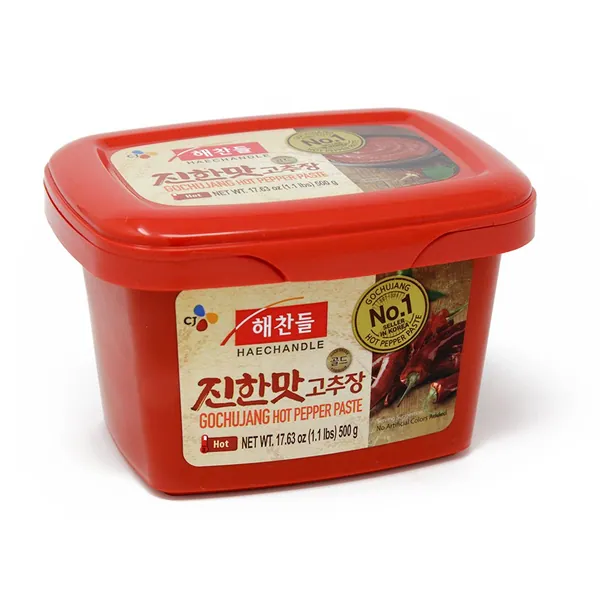
The heat of gochugaru itself ranges from 1,500 to 10,000 SHU depending on variety, but much of that is blunted by fermentation, which is why gochujang tastes noticeably milder than raw Korean chilli flakes. For UK cooks, medium is a sensible starting point. The CJ Haechandle and Chung Jung One Sunchang brands are both reliable at that level.
In Tesco and Sainsbury's larger stores, Chung Jung One's Sunchang gochujang (around £3.50–5 for a 500g tub) is now stocked — a sign of how mainstream the ingredient has become. Wing Yip and Oriental Mart carry broader ranges including premium regional varieties. Sous Chef is the best online option for UK-wide delivery.
Gochujang keeps well: 18–24 months unopened, 6–12 months refrigerated after opening. A darkening surface is normal — flavour deepens with age. Fuzzy mould means discard the top layer; if the paste underneath smells normal, it is generally still safe.
Doenjang: The Overlooked One
Doenjang is often described as Korea's version of miso, and while the comparison is structurally fair — both are fermented soybean pastes — it understates how different the finished product is. Traditional doenjang ferments in onggi pots for a minimum of six months, sometimes years. The flavour is more aggressive than most Japanese miso: pungent, earthy, with a pronounced salty funk that mellows in cooking.
The most common use is doenjang-jjigae — a robust stew with tofu, courgette, mushrooms, and anchovy stock. It is one of the most widely eaten dishes in Korea, served as a banchan alongside rice in Korean home cooking multiple times a week. The paste dissolves into the broth rather than the broth being added to the paste: about a tablespoon of doenjang per 300ml of stock, adjusted to taste.
Doenjang also makes an excellent dipping sauce for raw vegetables (*ssamjang* is the version with gochujang stirred in), and is rubbed onto pork belly before roasting in some recipes. It should never be confused with Japanese miso for these applications — miso is too sweet and too mild to substitute.
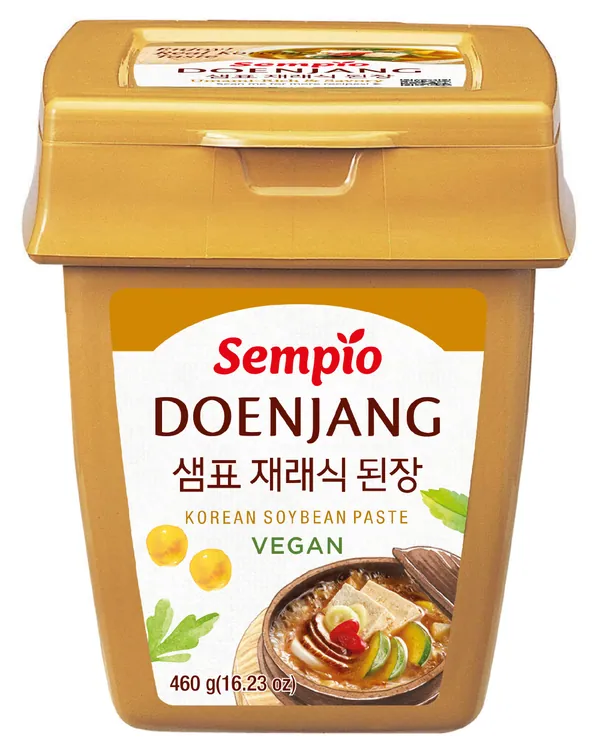
Sempio's doenjang is the most consistently available UK brand, at Amazon and HMart. It is the commercial, shorter-fermentation version — adequate for everyday cooking. If you find artisan or traditional doenjang at a Korean grocer, the flavour difference is significant.
Cheonggukjang: The Intense One
Cheonggukjang is Korea's most pungent fermented food — a fast-fermented soybean paste that takes only two to three days (compared to six months or more for traditional doenjang). The smell is assertive. It is often compared to strong blue cheese or ripe Limburger, and it is one of those foods where the gap between smell and taste is enormous — in soups the flavour is deeply savoury and warming, without the aggressive funk the smell promises.
Cheonggukjang-jjigae is a Korean comfort food classic, though it is best cooked with the windows open. Sempio's version is the most accessible for UK buyers. This is a specialist interest ingredient rather than an essential; buy it once you are already comfortable with doenjang.
Jeotgal: Fermented Seafood
*Jeotgal* (젓갈) is the category of salted, fermented seafood that features in Korean cooking both as a condiment and as a kimchi seasoning ingredient. The most relevant for UK cooks is *saeu-jeot* (새우젓, salted fermented shrimp), which appears in kimchi paste recipes and adds an umami depth that fish sauce alone does not fully replicate.
Other jeotgal include *myeolchi-jeot* (fermented anchovy), *ojingeo-jeot* (fermented squid), and *g굴-jeot* (fermented oyster). These are banchan in their own right in Korean home cooking — small, intensely flavoured condiments served alongside rice. They are difficult to source in the UK outside New Malden and London Chinatown specialist shops.
For making kimchi, saeu-jeot is the main jeotgal to seek out. Centre Point Food Store in London Chinatown stocks it; Oriental Mart and specialist Korean grocers occasionally carry it. Substitute: increase fish sauce quantity slightly and add a pinch of MSG. Not identical, but it closes most of the gap.
Makgeolli, Cheongju, and Fermented Drinks
Korean fermentation extends well beyond food. *Makgeolli* (막걸리) is a milky, lightly sparkling rice wine made by fermenting short-grain rice with *nuruk* (a wheat starter culture). The live cultures in unpasteurised makgeolli continue fermenting in the bottle, which is why bottles must be shaken before pouring and stored cold. Alcohol content runs around 6–8%.
*Cheongju* (청주) — the Korean equivalent of Japanese sake — is the clear, filtered result of the same fermentation process. *Soju* takes a different route: distilled, typically from diluted ethanol or grain, though premium versions are pot-distilled from rice or barley. Soju's connection to fermentation is therefore more indirect, though premium varieties have a yeasty complexity absent from the mass-market product.
Unpasteurised makgeolli is available from New Malden and specialist Korean drink importers in the UK; pasteurised (longer shelf life, no live cultures) is increasingly available at Waitrose and online.
Health Claims: What the Science Actually Says
Korean fermented foods are genuinely good for gut health — though the science is more nuanced than marketing suggests. The lactobacillus bacteria in kimchi are well-researched probiotics; specific strains have shown effects on gut microbiome diversity in controlled studies. Crucially, those effects are meaningful only in live, unpasteurised kimchi. Many commercial kimchi products sold outside Korea are pasteurised, which extends shelf life but kills the probiotic bacteria.
Doenjang contains isoflavones (from soy) and has been the subject of epidemiological studies examining links with lower incidence of certain cancers in Korean populations. The confound is that Korean diets differ from Western diets in many more dimensions than fermented food consumption alone, making it difficult to isolate doenjang specifically. The honest position: the probiotic and nutritional case for fermented foods is solid; specific health claims beyond "supports gut diversity" are unproven.
The fermentation process generally increases bioavailability of nutrients and generates B vitamins. There is a reason Korean longevity statistics attract research interest — diet is one factor under investigation among several.
Getting Started
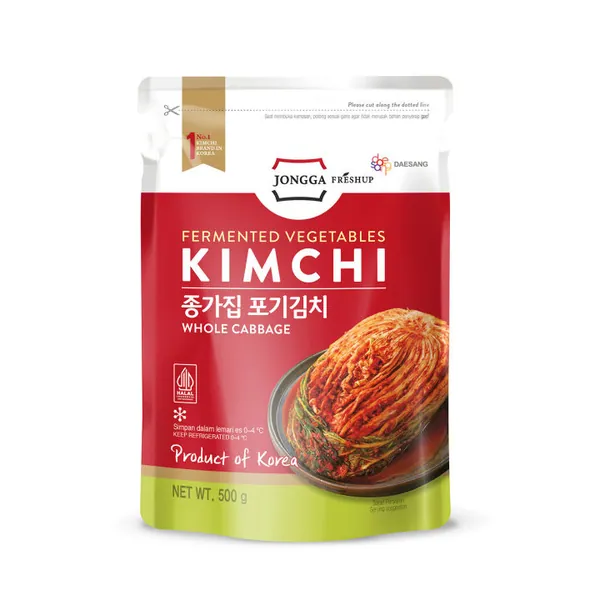
You do not need to start making your own kimchi to engage with Korean fermentation. Start with three products: a jar of good kimchi (Daesang's Jongga brand is widely available and reliably made), a tub of gochujang for cooking, and a tub of doenjang for stews and dipping sauce. Use them regularly. Let the flavour logic of the cuisine become familiar.
When you are ready to make kimchi, the full process is a Saturday afternoon project — salting the cabbage takes four to six hours, but the active hands-on time is about forty minutes. The ferment does the rest.
The funk grows on you. Most people who start eating Korean fermented foods with any regularity find it difficult to stop.